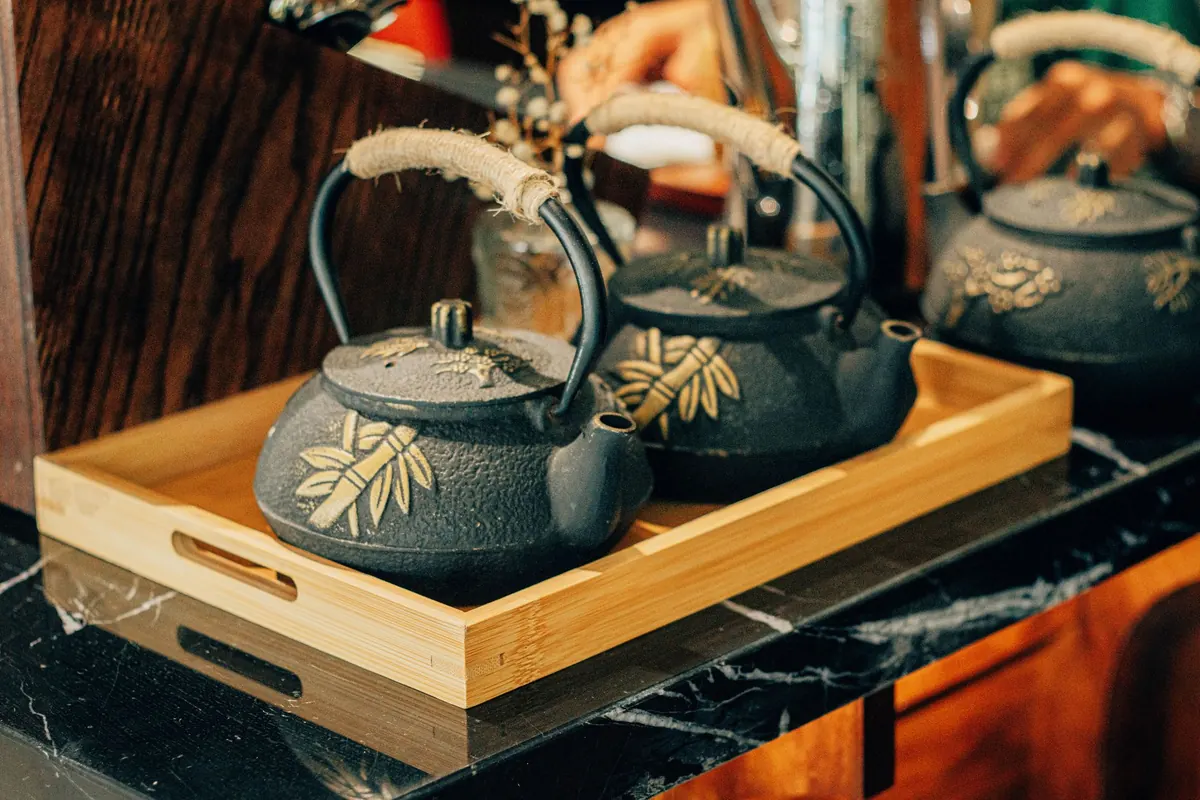
A teapot is the piece of tea gear you reach for every day, which is why the material matters more than the shape or the glaze pattern. Cast iron and clay sit at opposite ends of the teaware shelf. One is a heat battery. The other is a slow learner that takes on the character of whatever you brew in it. Neither is better in the abstract — the right choice depends on what's in your cupboard and how much care you're willing to give.
The short answer
If you want the verdict first:
- Cast iron — best for black tea, roasted oolong, hojicha and pu-erh, when you want the pot to stay hot through several refills.
- Glazed clay — the easy option: neutral flavour, no seasoning, no risk of one tea bleeding into another.
- Unglazed clay — for drinkers who mostly brew one style of tea and want a pot that improves with use.
- Neither — if delicate green, white or yellow tea is your daily habit, porcelain or glass will treat it better.
Heat retention: cast iron is the radiator
Cast iron's advantage is mass. A thick-walled pot takes a while to warm up, then releases that heat slowly, so the water you pour over the leaves stays hot through the infusion and often into the next one. That's a genuine benefit with teas that need sustained heat to open up: a broken-leaf Ceylon, an aged shou pu-erh, a heavily roasted yancha.
The flip side is control. You can't drop the temperature quickly in cast iron. If your green tea wants 80°C water, a heavy pot pushes it back up toward the temperature of the iron itself, and a tea that should taste fresh comes out stewed.
Clay is more variable than people expect. Two clay pots of the same size can behave completely differently depending on wall thickness. A thick Jianshui or Yixing pot holds heat surprisingly well — closer to cast iron than you'd guess. A thin Tokoname kyusu sheds heat quickly, which is exactly what a sencha wants.
Whatever you buy, preheat it. Fill the pot with hot water, let it stand for thirty seconds, then empty it before adding leaves. That one habit does more for brewing temperature than the material does.
Seasoning: clay remembers, enamel doesn't
Unglazed clay is porous. Its walls absorb a small amount of the oils and aromatic compounds from every infusion, and over months that builds into a patina. The pot darkens slightly, the smell when you lift the lid becomes a blend of every session it has held, and the tea brewed in it tastes a little rounder and fuller.
That's why clay drinkers keep several pots and dedicate each to a single tea family — a yancha pot, a shou pu-erh pot, a pot for aged white. Mixing a smoky lapsang into your delicate oolong pot is a mistake you make once.
Glazed clay doesn't season at all. The glaze seals the surface, so the pot stays flavour-neutral and behaves much like porcelain with a warmer look.
Cast iron sold for brewing is almost always enameled inside. Enamel absorbs nothing, seasons not at all, and won't pick up flavours — which makes it the most flexible option in the cupboard. One caution: a traditional Japanese tetsubin with a bare iron interior is a water kettle, not a teapot. Brewing tea in it strips the protective layer that keeps the iron from rusting, and the tannins can leave a metallic edge in the cup. Keep those for boiling water.
What each material does to flavour
Enameled cast iron is close to neutral, so the shift you taste comes from temperature. Held hot, black tea gives up more malt and cocoa notes and a heavier body. A delicate first-flush Darjeeling that tastes bright in porcelain can taste flat and dull in cast iron after five minutes.
Unglazed clay trades aroma for body. The porous surface pulls a little of the high, perfumed top notes out of the liquor, and in exchange the texture gets silkier and the finish lasts longer. That's a good trade for aged pu-erh and roasted oolong, where depth matters more than perfume. It's a poor trade for dancong, jasmine-scented teas, or a high-mountain Taiwanese oolong you bought for its aroma.
Bare iron interiors react with tea too, sometimes darkening the liquor and adding a faint metallic taste. If you have a medical reason to watch your iron intake, treat a teapot as teaware rather than a supplement and ask a doctor for guidance.
Care: two different routines
Cast iron (enameled)
- Rinse with hot water only. No soap, no scouring pad — both dull or damage the enamel.
- Empty the leaves as soon as you finish. Tea left overnight is how pots get stained and musty.
- Dry inside and out, including the spout and the rim where the lid sits, which is where rust starts.
- Don't put it on a burner unless the maker says it's stovetop-safe. Enamel can crack from direct heat.
- Store with the lid off, or a scrap of paper between lid and rim, so air can circulate.
Clay
- Hot water rinse, again no soap — unglazed clay absorbs detergent and passes it on to your tea.
- Air-dry completely, lid off, before putting it away.
- Warm the pot with hot water before brewing, especially in cold weather, to reduce the risk of cracking.
- Keep one pot to one tea family.
- Don't boil the pot to "reset" it. It won't remove absorbed oils, and thermal shock can crack it.
Choosing in the shop
Weight