A teapot does not get dirty the way a frying pan does. There is no grease to cut and no burnt crust to scrape. What builds up instead is a thin, quiet film of tannins and minerals — the same compounds that give tea its color and taste. Left alone, that film becomes brown rings inside a glass cup, a dull haze on porcelain, a sour smell in a clay pot and rust in an iron kettle.
None of it is difficult to remove, as long as you match the method to the material. A scouring pad, a dishwasher cycle or a squeeze of dish soap in the wrong vessel can do damage in one afternoon that no amount of care will undo.
The rules that apply to everything
- Clean sooner rather than later. A rinse within ten minutes of pouring takes seconds. A dried-in stain takes an overnight soak.
- Start with the mildest method and work upward: hot water, then soft cloth, then a baking soda paste, then a soak. Only escalate when something actually fails.
- Dry completely before storing. Trapped moisture is what causes musty smells, and it is the most common mistake people make with teaware.
- Wash one material at a time. A cast iron kettle knocking against a porcelain lid in the bottom of a sink is how chips happen.
Glass teaware: keep it clear
Glass is the most forgiving material you can brew in, and also the one where neglect shows fastest. Tannins cling to the inside of a glass gongdao cup and leave a permanent-looking ring if you let it dry there.
Rinse with warm water as soon as the tea is gone, then wash by hand with a drop of mild dish soap and a soft sponge or a bottle brush for tall cups. Skip abrasive powders and steel wool entirely — glass scratches easily, and scratched glass holds stains that you will never rinse out.
If a stain has already set
Make a paste of baking soda and a little water, rub it gently with a soft cloth in small circles, and rinse. For the white mineral haze that builds up from hard water, fill the vessel with equal parts white vinegar and water, let it sit for half an hour, then rinse thoroughly and wash as usual.
Watch the temperature. Pouring boiling water into a cold glass pot, or running cold water over a hot one, can crack it. Warm the glass first. Most borosilicate glass is dishwasher safe on the top rack, but hand washing keeps it clearer, and the heated drying cycle is what etches the surface over time.
Unglazed clay: protect the seasoning
An unglazed clay pot — Yixing, Tokoname, Jianshui — is porous by design. It absorbs tea oils and, over months, develops a patina that improves the tea you brew in it. That same porosity means it will also absorb anything else you put near it, including soap.
Never use soap or a dishwasher on unglazed clay. The clay takes in the detergent and releases it into your tea for weeks. The whole routine is water, fingers and air:
- Empty the leaves promptly.
- Rinse the pot inside and out with hot water.
- Rub the interior with your fingertips or a soft brush to lift the residue.
- Rinse again, then leave the pot upside down with the lid off until it is bone dry.
Keep one pot for one type of tea. A pot seasoned with roasted oolong will flavor a delicate green, and there is no way to reverse that.
The shine on the outside is not dirt — it is the patina, and you should leave it. If a pot develops a musty smell, it is almost always because it was stored damp with the lid on. Let it air for several days. If the smell persists, simmer it gently in a pan of clean water for fifteen to twenty minutes, let it cool in the water, then dry it thoroughly. Do not boil pots with metal handles or decorative fittings.
Cast iron: dry is the whole game
First, work out what is inside your kettle. A bare iron interior and an enameled interior need different treatment, and the difference matters.
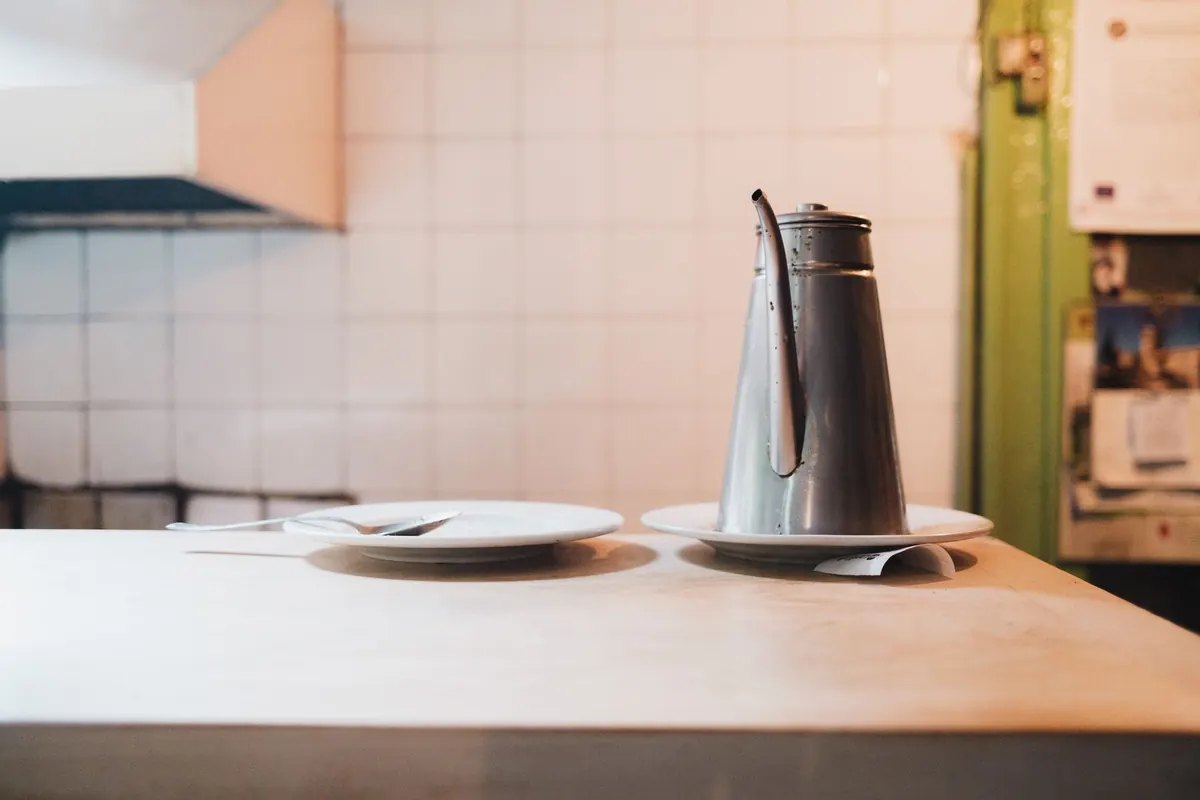
Bare iron: no soap, no dishwasher, no standing water, ever. Rinse with hot water, wipe it dry, then set it on low heat for a minute or two to drive off the last of the moisture. Store it with the lid off so air can circulate. If rust spots appear, scrub them with a nylon brush — not steel wool, which can leave fibers behind — then boil fresh water in the kettle, pour it out and dry it over heat. Use a bare iron kettle for water, not for brewing; tannins and iron react, darkening both the tea and the inside of the pot.
Enameled iron: mild soap and a soft sponge are fine. Avoid metal spoons and abrasive cleaners, which will scratch the enamel, and never shock it with a sudden temperature change. Hand wash and dry, always.
Porcelain, glazed ceramic and stoneware
These are the easy ones. Warm water, mild soap and a soft sponge handle almost everything, and most everyday cups and pots survive a dishwasher without complaint. The exception is anything with gilding, hand-painted decoration or a gold rim — dishwashers dull gold quickly, so wash those pieces by hand.
For brown tannin stains inside a porcelain cup, a baking soda paste works well, and an overnight soak with a denture cleaning tablet is a common and effective trick for narrow-necked pots. Rinse thoroughly afterward. Skip abrasive cleansers, which scratch the glaze and give future stains somewhere to hide.
Strainers, gaskets and stubborn problems
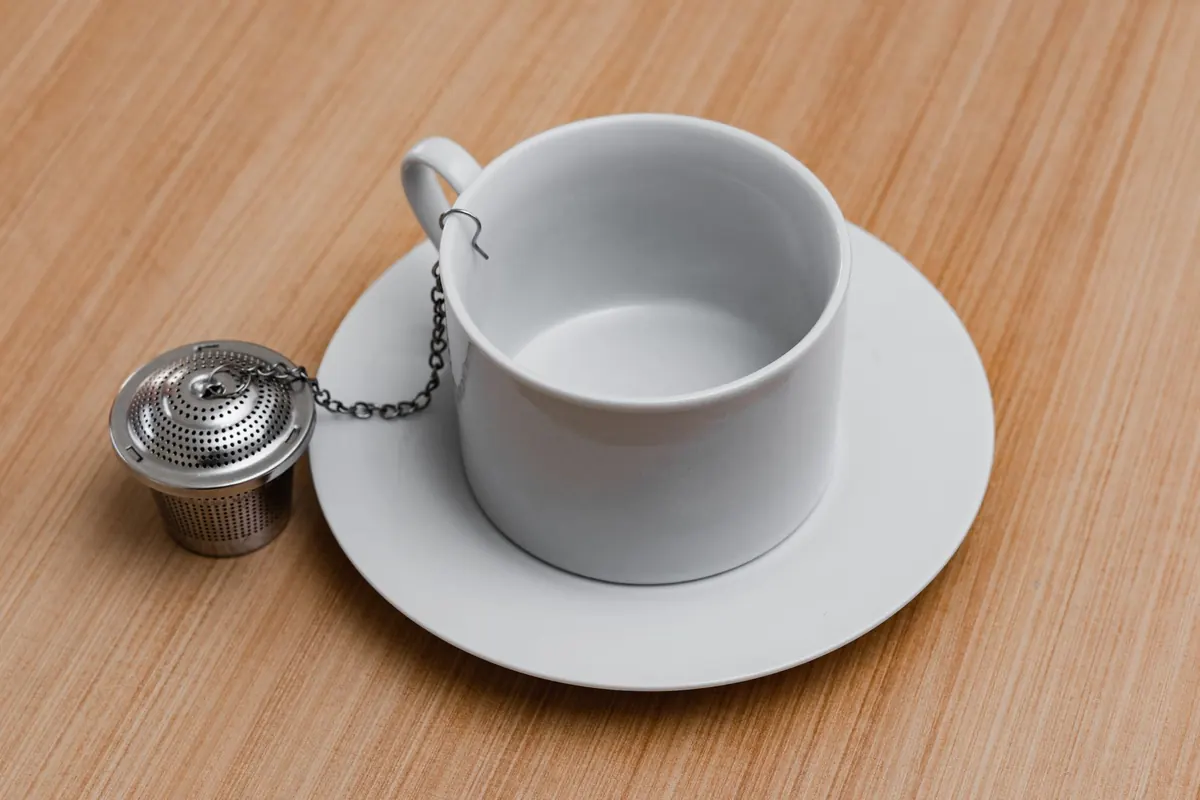
Mesh strainers, infuser baskets and teapot spouts collect fine leaf debris that a rinse misses. Soak them in warm water with a spoonful of baking soda, then work an old toothbrush into the mesh. Rubber gaskets on travel tumblers and press-style teapots eventually hold onto odors; if a soak does not fix it, replace the gasket.
Two final notes. Never dry fine teaware with a linty towel — use a clean, soft cloth, or let pieces air dry upside down on a rack. And if a piece is cracked, stop using it for hot tea; a crack can spread without warning and the repair is never food safe.
A five-minute routine that prevents most problems
Rinse glass and porcelain the moment you finish a session. Rinse clay and iron with hot water, dry them properly, and store everything with the lids off. Once a month, give your glass and porcelain a vinegar soak whether they look like they need it or not, and give your clay pots a full day of air.
That is the entire secret. Teaware lasts for decades not because it is treated delicately, but because it is cleaned consistently, with the right method for each material.
Photo: Airam Dato-on / Pexels