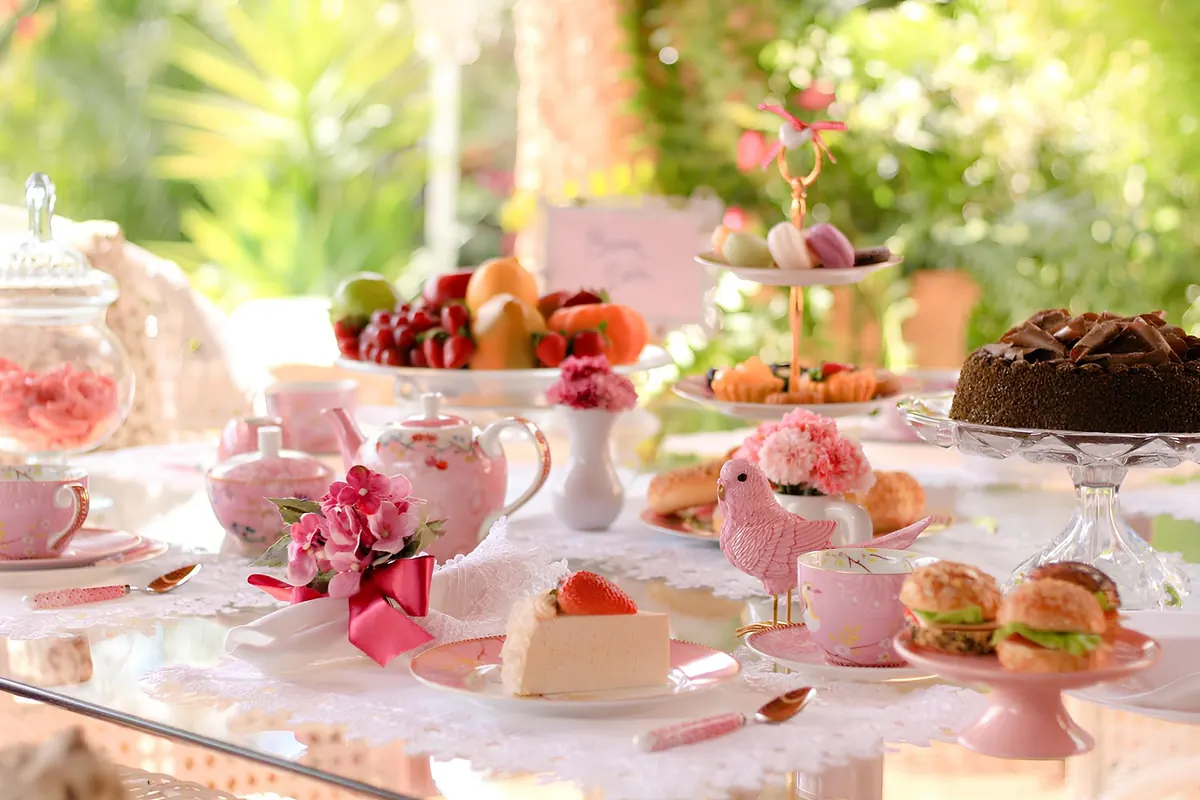
The teacup is small and the rules are old, but nobody is grading you. Still, a handful of habits separate a tea that flows from one that stumbles: where the napkin goes, who pours first, how to eat a scone without shedding crumbs down your front. Whether you are hosting six people at home or arriving as a guest at a formal hotel service, these are the details worth knowing.
Before Anyone Sits Down
The host takes the seat nearest the tea tray, usually at the head of the table or the corner the pot will be poured from. As a guest, wait for the host to indicate where to sit, or choose a chair that leaves the space beside the tray free. Sit up, let your hands rest at the table edge rather than flat on the tabletop, and keep elbows off the cloth.
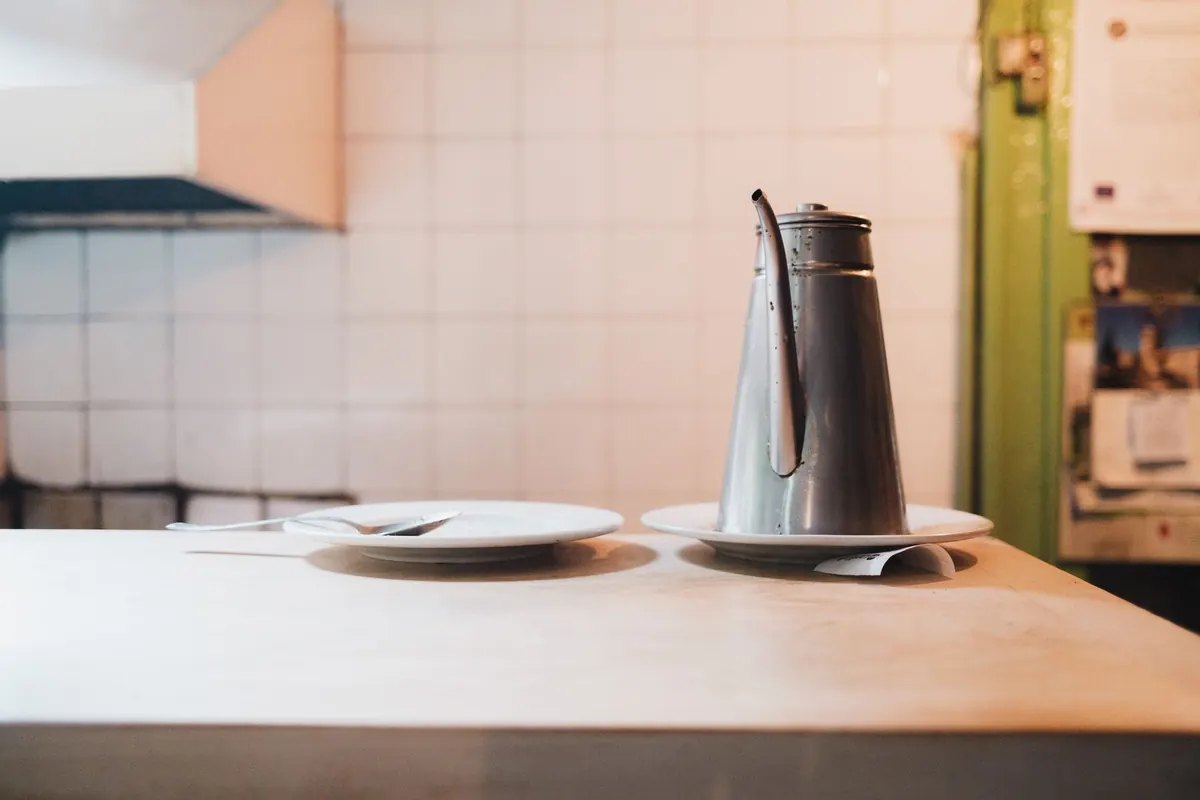
Set the table so tea can be poured without a traffic jam: the pot, a jug of hot water, milk in a small pitcher, sugar in a bowl with its own spoon or tongs, and lemon slices on a little dish. That way the host can serve a whole table without leaving the room.
Afternoon tea, cream tea, high tea
These are not the same meal. Afternoon tea is the light, three-tiered affair of sandwiches, scones and small cakes, traditionally served between about 3pm and 5pm. Cream tea is the pared-back version: scones, jam, cream and a pot of tea. High tea is something else entirely — a working supper eaten later in the day, with savoury dishes and bread and butter. If someone invites you to high tea, don't expect finger sandwiches.
The Napkin, Handled Properly
Unfold the napkin and lay it across your lap as soon as you sit, before you touch anything on the table. If it's large, fold it in half with the crease facing your waist, so the clean inside of the fold is what reaches your mouth and the loose edges fall near your knees.
Never tuck it into your collar or your waistband. Blot your mouth rather than wiping, and do it before you sip rather than after, particularly if you've just eaten something buttery. When you finish, leave the napkin loosely folded to the left of your place. If you step away mid-meal, put it on your chair. Not on the plate, and never balled up.
Who Pours, and in What Order
The host pours, or whoever is sitting within reach of the pot. Serve the guest to your right first, then work around in one direction, pouring for yourself last. Fill cups two-thirds to three-quarters full; a brimming cup spills, and guests shouldn't have to hover over the saucer to drink it.
Offer milk, lemon and sugar rather than adding them. Ask the question before the tea goes in, not after.
Milk first or tea first? Both are defensible. Milk first is the older habit, and it protected delicate china from hot liquid; tea first lets you judge how strong it is before diluting it. Pick one, do it consistently, and don't comment on what everyone else does. If you take lemon, skip the milk — the acid will curdle it — and squeeze the slice gently over the cup before dropping it in, or leave it on the saucer.
Keep the cup on its saucer while it's being filled. Lifting it toward the pot is unsteady, and it isn't charming.
Stirring Without the Clatter
Put the spoon in and move it gently back and forth — six o'clock to twelve, and back — rather than around in circles. Circles rattle the cup and take longer. Fold, don't churn.
When you're done, lift the spoon, let it drip over the cup, and rest it on the saucer behind the cup. It should never stand in the cup, and it should never come to rest on the tablecloth. If sugar is shared, use the tongs or the spoon in the bowl, never your own.
And no squeezing the tea bag against the side of the cup at a formal tea. It looks fussy and it makes the tea bitter. At your own kitchen table, nobody is watching.
Cup, Saucer, and Hands
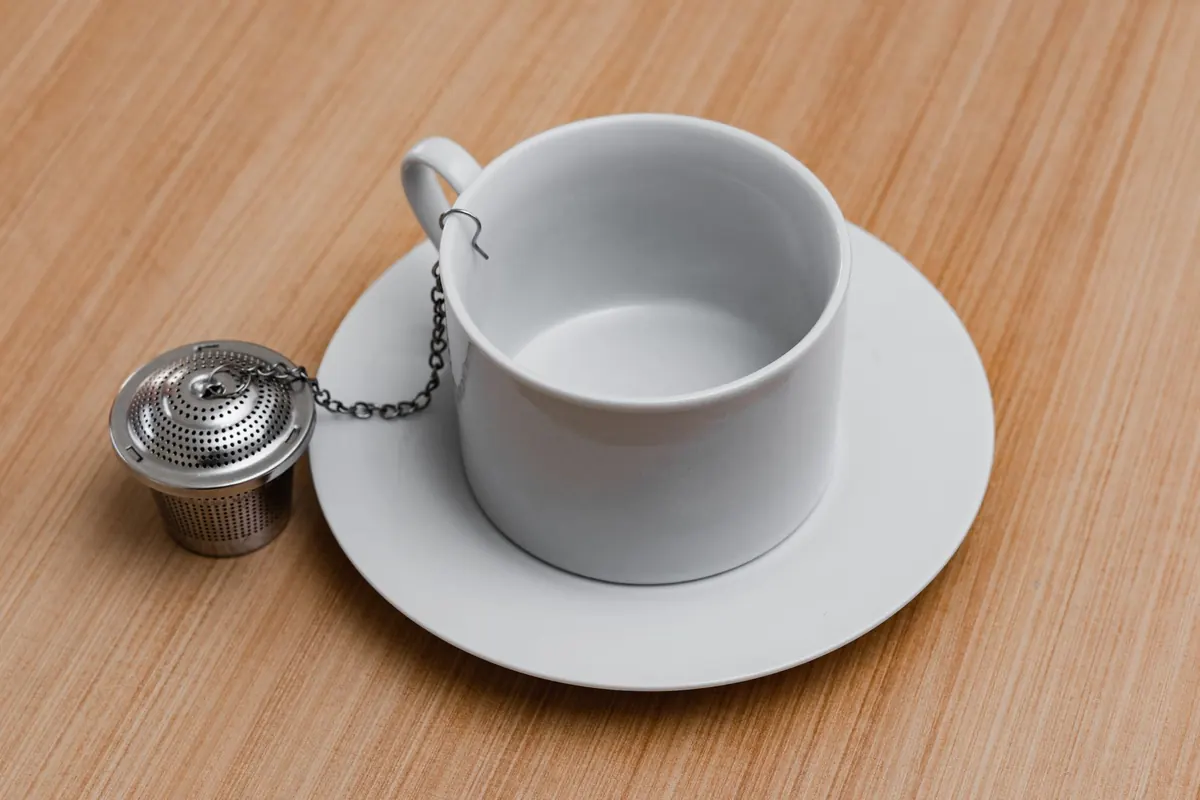
Hold the cup by the handle with your thumb and first finger, letting the second finger rest lightly beside it. A raised little finger is an old affectation, not a rule. Sip quietly, look into the cup rather than over the rim at the person opposite, and don't blow on hot tea. Wait for it.
If you're seated, the saucer can stay on the table while you lift only the cup. If you're standing at a reception, hold the saucer in one hand and the cup in the other — never both in the same hand. When you rise, bring the saucer up with the cup and set them down together.
Utensils and the Food
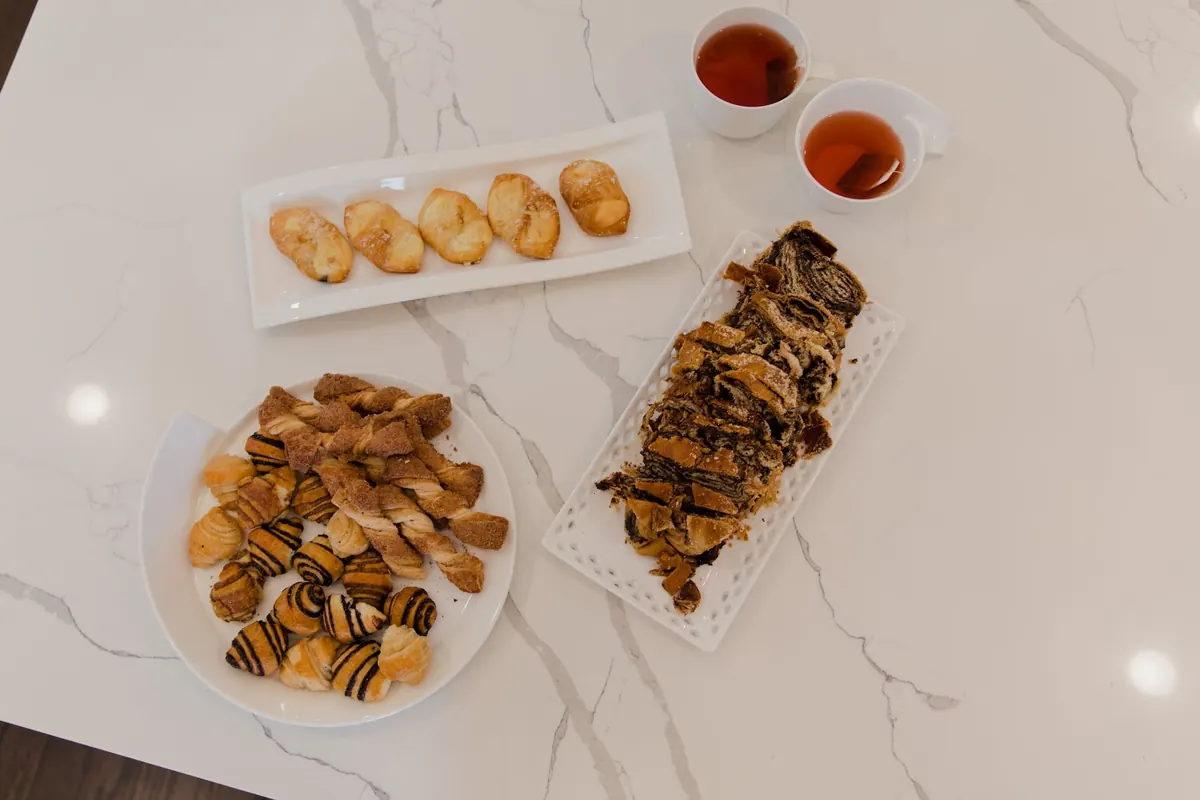
On a three-tiered stand, sandwiches sit at the bottom, scones in the middle, cakes and pastries on top. Help yourself from the tier nearest you, and pass the stand along if someone further down the table needs it. Plates travel to the right, and please and thank you cover almost every awkward moment.
- Sandwiches. Eat them with your fingers, in two or three bites. Use a fork only if they're large, open-faced or dressed.
- Scones. Break them with your hands rather than slicing through with a knife, or split cleanly with a knife if they're dense. Add jam and cream to the bite you're about to eat, not to the whole scone.
- Jam and cream in which order? Cornwall and Devon disagree, and so do plenty of families. Ask the host, or take them however you prefer. The scone tastes the same.
- Pastries. Use the small fork if one is provided. A tart or petit four that fits in a single bite doesn't need cutlery.
- No dunking. Biscuits and scones stay above the rim of the cup at a formal tea.
If several forks sit at your place, work from the outside in, and never put used cutlery on a shared plate or back into a communal bowl.
If You're Hosting
Keep the pot warm with a cozy and offer refills before cups are empty rather than after. Have a second pot of a straightforward black tea and one caffeine-free option, so nobody has to drink something they don't like. Refill quietly; don't interrupt a conversation to do it.
Let guests serve themselves from the stand, but hand over dishes that are heavy or out of reach rather than letting people stretch across the table. Clear used plates as they're finished — a tea table gets crowded quickly.
When Something Goes Wrong
You will drop a spoon. Someone will spill